

Discreet Fidgets vs Loud Toys for Work Focus
Last Updated: November 21, 2026
Quick Summary
Discreet fidgets work silently in your hand, while loud toys announce themselves to the whole room. That single distinction decides whether a sensory tool helps you focus or creates friction with coworkers. Keep loud toys for home and bring a quiet fidget to the office.
- Quiet fidgets share one trait: no loose parts that click, pop, or rattle.
- Textured strips, putty, and palm-sized squeeze tools cover most silent options.
- Keep meeting fidgets below the table line and use one hand.
- Use noise, then size, then appearance as your selection criteria.
- SPEKS Odds silicone magnetic set costs $40 and softens magnet sound.
Table of Contents
- Discreet Fidgets vs Loud Toys: What Belongs at Your Desk
- Quiet Fidget Toys for Work: What Actually Stays Silent
- Discreet Fidget Toys for Adults: Professional-Looking Options
- Fidget Toys for Meetings: Staying Subtle Under the Desk
- Fidget Toys for ADHD at Work: Focus, Attention, and Calming Input
- Loud Toys at Work: Clickers, Poppers, and Coworker Distraction
- Noise, Size, and Professional Appearance: A Selection Framework
- Pick Your Desk Fidget and Shop the Collection
- Frequently Asked Questions
Discreet Fidgets vs Loud Toys: What Belongs at Your Desk
The difference between a discreet fidget and a loud toy comes down to one question: can the people around you hear it? A quiet fidget works silently in your hand, while a loud toy announces itself to the whole room. That single distinction decides whether a sensory tool helps you focus or becomes a source of friction with coworkers.
At Hiitzchrissy, we hear from shoppers who want a fidget they can actually use at work without drawing stares. Below, we break down which options stay silent, which ones belong at home, and how to pick a discreet fidget that fits your desk and your workday.

How Noise and Discretion Shape the Choice
A fidget toy is a small object you handle to channel restlessness or stress. Discretion is the measure of how little attention that object draws, through sound, size, and appearance. A quiet fidget for work scores high on all three; a loud toy fails on the first.
The split is practical, not moral. Some people focus better with a clicker in hand, and that is fine at home. In a shared office or a classroom, the same clicker can break a coworker's concentration. Most workplace conflicts over fidgets come down to sound, not intent.
A Side-by-Side Comparison of the Two Categories
The comparison below maps both categories across the dimensions that matter in a shared workspace.
| Dimension | Discreet fidgets | Loud toys |
|---|---|---|
| Sound | Silent to near-silent; no loose parts that click, pop, or rattle | Audible by design; sharp, repeating sounds carry in open offices and quiet rooms |
| Attention drawn | Low; stays in the hand or under the desk | High; the sound pulls coworkers' eyes and ears |
| Best setting | Shared offices, meetings, classrooms, remote calls | Home, private workspace, or outdoor use |
| Typical materials | Solid silicone, putty, smooth magnets, textured strips | Buttons, springs, snapping mechanisms, poppers, clickers |
| Effect on coworkers | Neutral to positive when used below the desk line | Can break concentration and create friction |
| Professional appearance | Neutral colors and clean shapes read as desk tools | Bright colors and toy-like shapes read as play |
| Focus benefit | Tactile input without auditory distraction | Can help the user but at the cost of those nearby |
A common pattern is that the tool helping one person is the same tool distracting another. That is why the comparison matters more than any single product recommendation: the right choice depends on who else is in the room.
Why Sensory Input Matters at Work
A common approach is to keep one tactile tool within reach and use it during calls or deep work.
If you want the broader picture, our roundup of the best desk fidget toys for focus covers the full range of options. And if you are still weighing whether any of this helps, our article on whether fidget toys actually help adults focus digs into the question before you spend a dime.
Quiet Fidget Toys for Work: What Actually Stays Silent
The quietest fidget toys for work share one trait: no loose parts that click, pop, or rattle. Solid silicone, putty, and smooth magnets move without sound. Anything with a button, a spring, or a snapping mechanism will carry across a quiet room.
Textured Strips, Putty, and Palm-Sized Tools
Three categories cover most silent options. Textured strips sit flat on a phone case or water bottle and offer tactile input with zero noise. Putty kneads and folds without a sound. Palm-sized squeeze tools absorb restless energy in one hand.
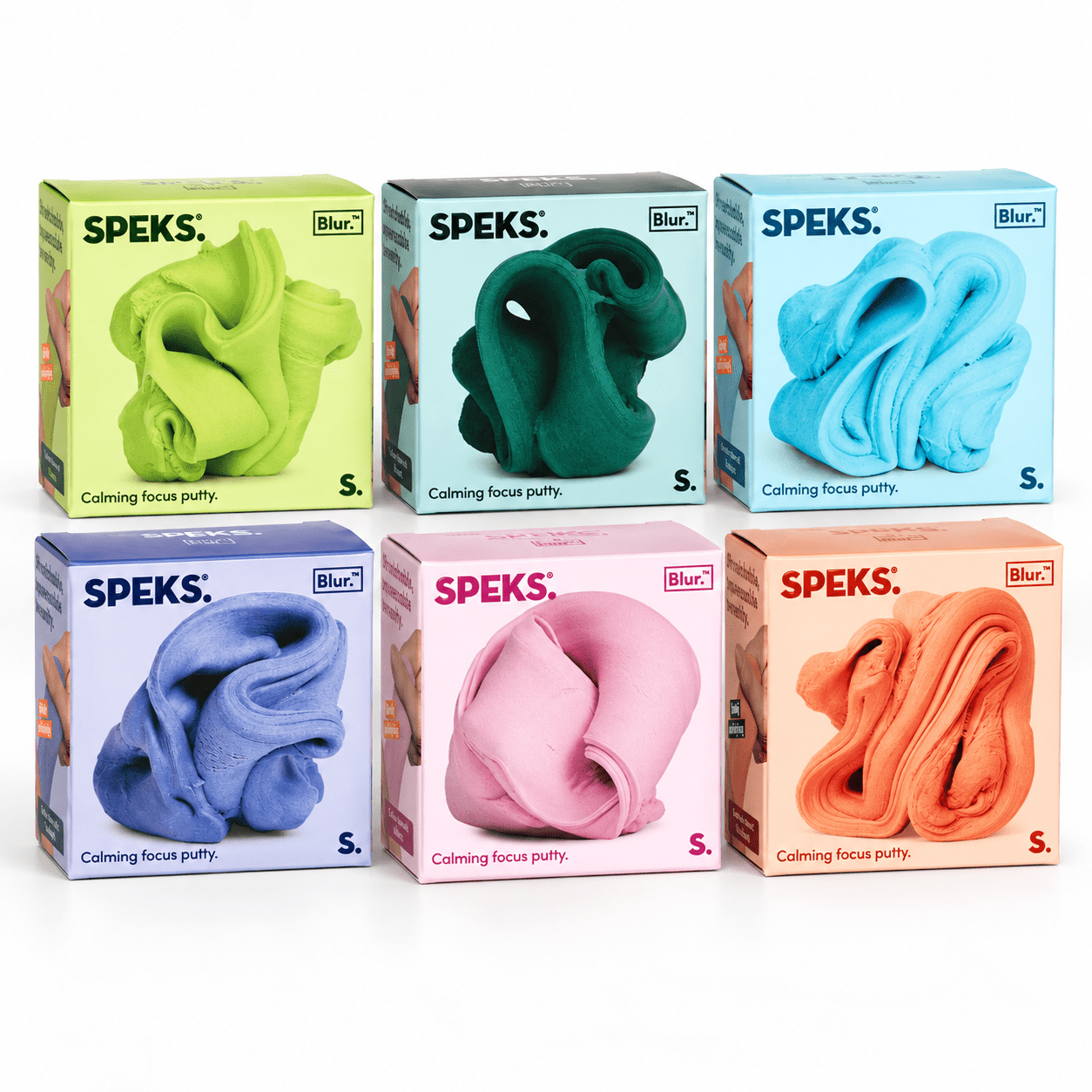
Our SPEKS Slabs silicone sensory stickers fit the first category: three textured stickers per pack that add tactile feedback to the items you already carry. For a kneading option, the SPEKS Blur calming focus putty is soft and velvety, holds its shape, and stores in a compact twist-off container.
Discreet Fidget Toys for Adults: Professional-Looking Options
A discreet fidget for adults should look like something a professional would keep on a desk. Translucent pastel stress balls and sculpted magnets pass that test; a neon popper does not.
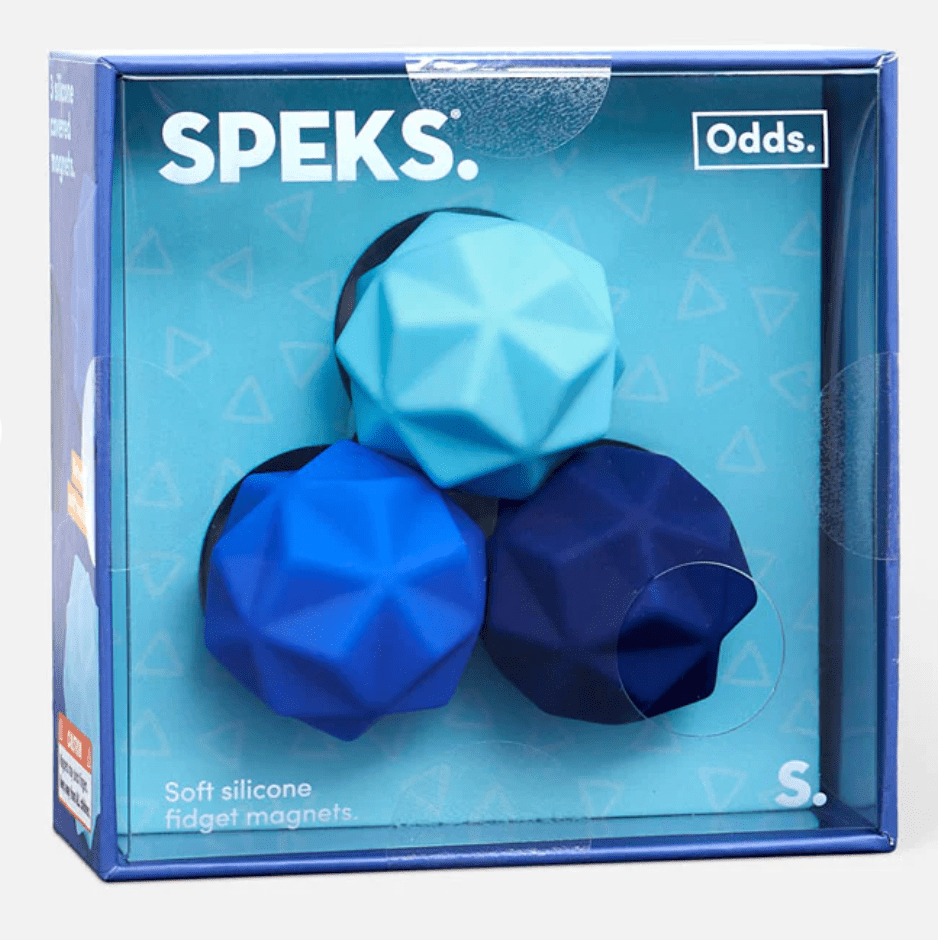
The SPEKS Gump mini surface stress balls come as a four-pack with four textures, small enough to sit beside a keyboard without clutter. For something more sculptural, the SPEKS Odds magnetic set at $40 pairs textured silicone with a quiet magnetic pull.
| Option | Noise Level | Desk Fit | Price |
|---|---|---|---|
| Textured stickers | Silent | Flat, on phone or bottle | $25.00 |
| Sensory putty | Silent | Compact container | $25.00 |
| Mini stress balls | Silent | Palm-sized, four-pack | $30.00 |
| Silicone magnets | Near-silent | Compact, three per set | $40.00 |
| Clickers and poppers | Audible | Draws attention | Varies |
Price
Fidget Toys for Meetings: Staying Subtle Under the Desk
The best fidget toys for meetings stay in your lap or under the desk, out of camera view and out of earshot. Keep the tool below the table line, use one hand, and avoid anything that requires looking down.
A small putty or a palm-sized squeeze tool works well here. Watch out: passing a fidget around the table or fidgeting above the desk line reads as disengagement, even when you are listening closely.
Fidget Toys for ADHD at Work: Focus, Attention, and Calming Input
No single fidget works for everyone, so individual preference matters more than any recommendation. Try one category at a time and notice whether your attention improves or the tool becomes its own distraction.
Loud Toys at Work: Clickers, Poppers, and Coworker Distraction
Loud toys have a place, just not in a shared workspace. Clickers, poppers, and snapping mechanisms produce sharp, repeating sounds that carry in open offices and quiet rooms. That repetition is exactly what wears on coworkers.
The fair move is simple: keep loud toys for home, and bring a quiet fidget to the office. If a colleague's toy is bothering you, a direct, friendly conversation beats dropping hints.
Noise, Size, and Professional Appearance: A Selection Framework
Use three criteria, in this order, to choose a desk fidget. Noise first, because it affects everyone around you. Size second, because it decides whether the tool fits your desk and pocket. Appearance last, because a professional look keeps the tool from reading as a toy.
Objective Criteria You Can Apply Before You Buy
Instead of relying on subjective labels like "quiet" or "discreet," assess each candidate against four repeatable tests.
- Sound test: Shake the tool near your ear and operate it as you would at your desk. If you can hear a click, pop, or rattle from more than an arm's length away, it will carry in a quiet room.
- Visibility test: Hold the tool at desk height and check whether a coworker across the room would notice movement. Anything that requires lifting above the desk line fails.
- Hand-movement test: Use it with one hand while reading. If it demands two hands or your eyes, it will pull attention from the task.
- Setting test: Match the tool to the environment, shared office, meeting room, remote call, or classroom, before you commit.
Matching the Tool to the Task and Environment
Different work tasks call for different tool characteristics. The mapping below helps you choose rather than browse.
| Task or environment | What to prioritize | What to avoid |
|---|---|---|
| Listening in a meeting | Silent putty or palm-sized squeeze tool kept below the table line | Anything that clicks, pops, or requires looking down |
| Typing or focused reading | Textured strips on a phone case or water bottle; one-hand use | Two-handed tools or anything that rolls off the desk |
| Presenting or speaking | No fidget in hand; keep it in a pocket | Visible tools that read as disengagement |
| Remote calls | Under-desk putty or mini stress balls out of camera view | Tools that make noise near the microphone |
| Shared open office | Near-silent magnets or textured stickers | Clickers, poppers, and snapping mechanisms |
Workplace Etiquette and Accommodation
Practical etiquette goes a long way. Keep the tool below the desk line, use one hand, and avoid passing it around the table. If a colleague's toy is bothering you, a direct, friendly conversation beats dropping hints.
The same courtesy applies in reverse: a tool that helps you may distract the person at the next desk, so check in when you are unsure.
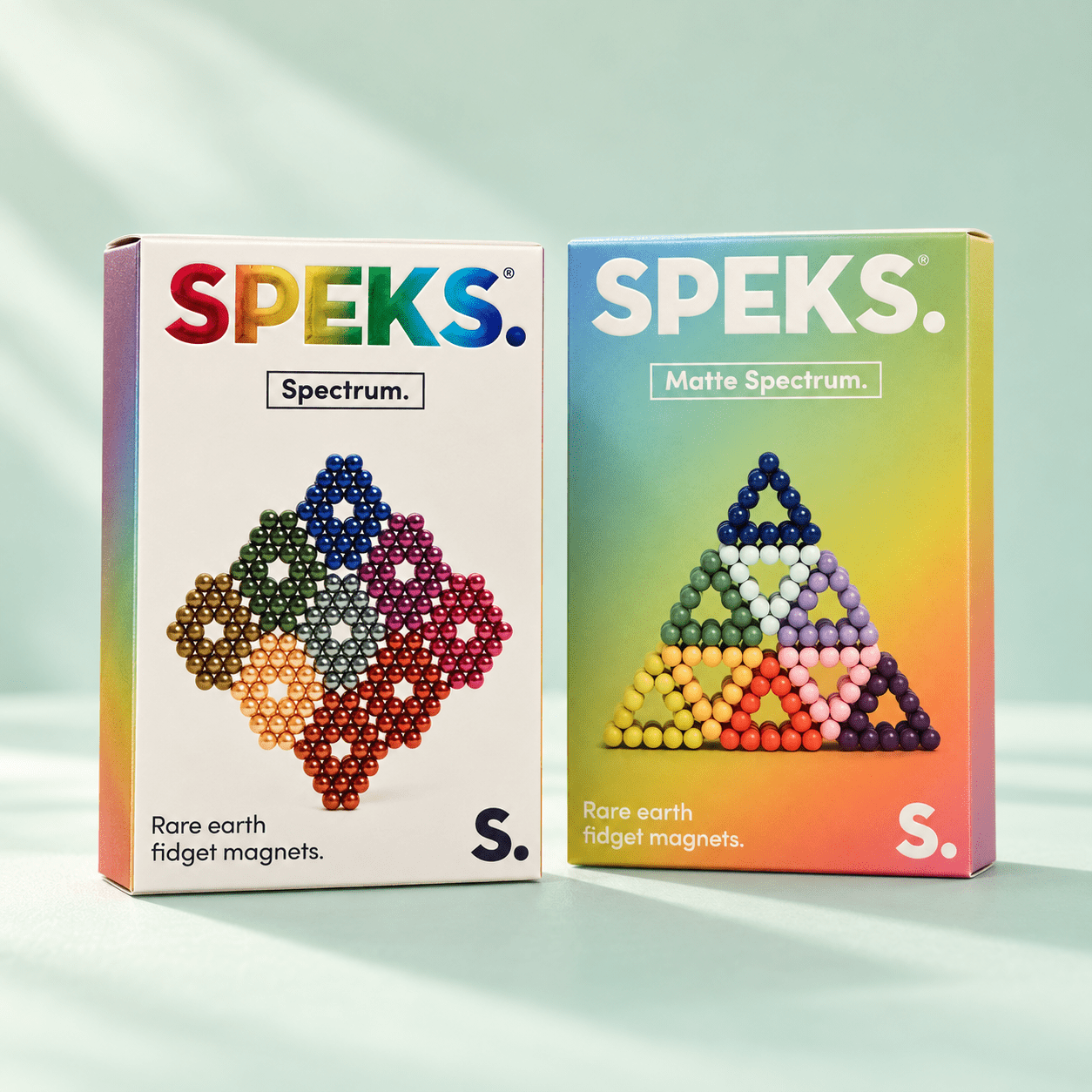
For a longer session, the SPEKS 432 mini magnetic balls at $50 come with a carrying case and a splitter card. The SPEKS Odds silicone magnetic set at $40 has a silicone exterior that helps soften the magnet sound.
Pick Your Desk Fidget and Shop the Collection
Choosing between discreet fidgets and loud toys comes down to respect for the room you share. Start with one quiet option, use it for a week, and let your own focus tell you whether it stays.
At Hiitzchrissy, our curated collection includes textured sensory stickers, calming putty, mini stress balls, and magnetic fidget sets. Browse the collection, pick the texture that appeals to you, and give your desk a quiet upgrade.
Ready to find a fidget that fits your workday? Hiitzchrissy carries textured stickers, soft putty, mini stress balls, and magnetic sets designed for quiet, discreet use. Explore the collection and pick the one that matches how you focus.
Frequently Asked Questions
What is the quietest fidget toy for work?
Silicone-covered and putty-style tools are usually the quietest. SPEKS Odds wrap strong ferrite magnets in soft textured silicone, which softens the sound of the magnets clicking together, so they work well at a desk or in a meeting. Avoid metal clickers, poppers, and hard plastic toys, which carry across an open office.
Can fidget toys help you focus during meetings?
For many people, a quiet fidget gives restless hands something to do so attention stays on the conversation instead of on tapping, pen clicking, or shifting in the chair. The key is choosing a discreet fidget that stays under the desk and makes no noise. A loud toy defeats the purpose in a meeting because it pulls other people's attention away from the discussion.
Are discreet fidget toys for adults appropriate in a professional office?
Yes, when they are small, quiet, and unobtrusive.
Why can loud fidget toys distract coworkers?
Open offices carry sound. A clicker, popper, or hard magnetic toy produces sharp, repeating noises that are hard for nearby coworkers to tune out, especially in a quiet room or during a meeting. Even a small amount of repetitive sound can break someone's concentration.
How do you choose a fidget toy for a professional office?
Judge it on four things: noise level, size, appearance, and how it feels in your hand. A tool that fits in your palm, makes little or no sound, and looks tidy on a desk is the safest pick. Test it at home first. If you can hear it across a room, it is too loud for shared space.
