

Memory Gel Stress Balls for Anxiety: What Sets Them Apart
Last Updated: November 12, 2026
Quick Summary
Memory gel stress balls feel different because the soft gel compresses and returns to shape slowly, encouraging a longer, deliberate squeeze and release rather than rapid pressing. Many people find that steady rhythm easier to sustain during a stressful moment, though research specifically testing memory gel for anxiety is limited.
- Memory gel compresses under pressure and recovers slowly, unlike quick-bouncing foam or rubber.
- The slow rebound encourages a longer, deliberate squeeze-and-release rhythm during stressful moments.
- Squeeze slowly for about five seconds, release, breathe, and repeat for one to two minutes.
- Stress balls are a supporting behavioral aid and are not a treatment for an anxiety disorder.
- Test a single ball for a week before buying a set, since preferred firmness and texture vary.
Table of Contents
- Why Memory Gel Stress Balls Feel Different
- Are Stress Balls Good for Anxiety? What the Evidence Shows
- Memory Gel vs. Foam, Rubber and Other Stress Ball Materials
- How to Use a Stress Ball for Anxiety Relief
- Choosing a Ball for Your Sensory Preferences
- Disadvantages of Stress Balls and When They Are Not Enough
- Pick Your First Memory Gel Ball and Try It on a Hard Day
- Frequently Asked Questions
Why Memory Gel Stress Balls Feel Different
Memory gel stress balls have become a popular sensory tool for people who want a quick, hands-on way to ease restlessness. The keyword question is worth asking directly: why would memory gel stress balls be better for anxiety than other options?
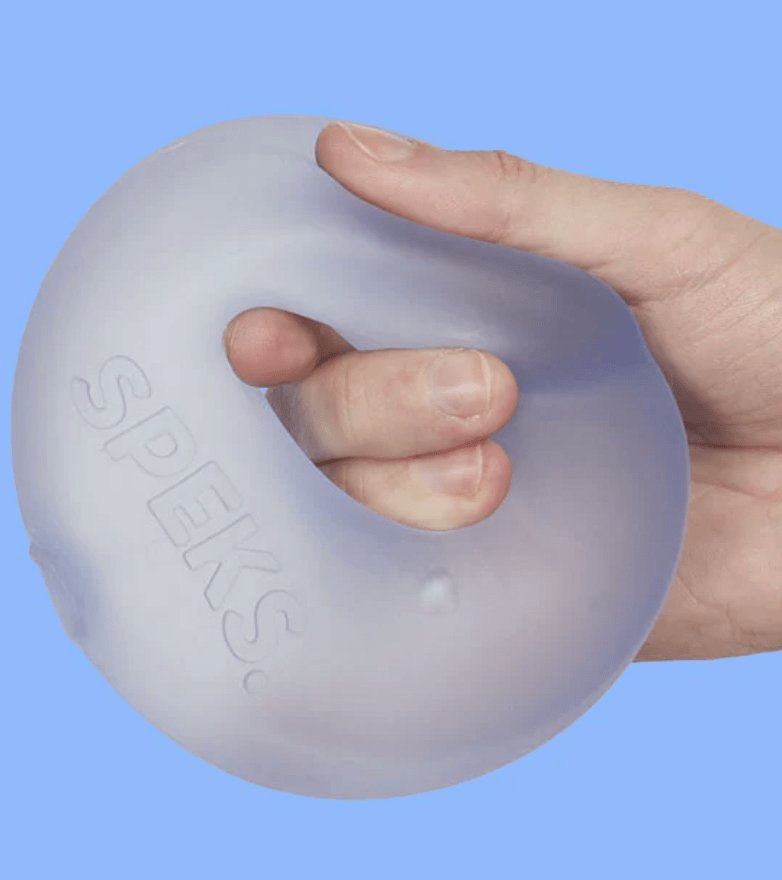
Many people who try a squishy for the first time expect a standard foam or rubber ball. Memory gel behaves differently.
What 'memory gel' actually means
Memory gel is a soft, squeezable polymer filling designed to deform and recover gradually. For a deeper look at what drives the cost of these balls, read why slow rising squishies cost more.
The SPEKS Gump Textured Memory Gel Stress Ball is built on this principle, with a soft memory gel filling and a raised exterior texture.
How slow rebound affects the squeeze
Slow rebound changes the rhythm of fidgeting. Instead of rapid, repetitive pressing, a memory gel ball encourages a longer, deliberate squeeze and release.
The SPEKS Gump Memory Gel Stress Balls - 6-Pack uses a slow-rising gel core and includes six mini balls in assorted pastel colors, which are included as shown in the set.
Are Stress Balls Good for Anxiety? What the Evidence Shows
Stress balls are widely used as simple self-soothing tools, and many people report that squeezing one helps them feel calmer in the moment.
It is important to be precise about the evidence. Much of the support for stress balls is general and anecdotal rather than drawn from large clinical trials of one product.
Research specifically testing memory gel for anxiety is limited.
Memory Gel vs. Foam, Rubber and Other Stress Ball Materials
Most stress-ball content treats every squishy as interchangeable. That is the gap this section fills: the material determines how the ball feels in your hand, how long it lasts, and whether you will actually reach for it during an anxious moment. Memory gel is one option among several, and the honest comparison is about trade-offs rather than a single winner.
The properties that actually differ
When you compare stress balls, four material properties do most of the work:
- Rebound speed. How quickly the ball returns to shape after you release it. Memory gel is slow; foam and rubber are fast.
- Resistance. How hard you have to squeeze to deform the ball. Dense rubber is high-resistance; soft gel is low-resistance.
- Texture and surface. Smooth, matte, raised, ridged, or fabric-covered. Texture drives whether the ball feels soothing or distracting.
Memory gel
Memory gel is a soft polymer fill that deforms under pressure and recovers gradually. The slow rebound is the defining trait: a full squeeze-and-release cycle can take several seconds, which encourages a longer, more deliberate rhythm instead of rapid repetitive pressing.
Foam
Foam is light, inexpensive, and quick to rebound. It tends to feel firmer at first squeeze and springs back almost immediately, which suits people who want an active, repetitive fidget. Foam is also the most common material in bulk multipacks. The trade-off is texture: foam can feel dry or crumbly, and lower-density foam compresses permanently over time.
Rubber and dense elastomer
Rubber and dense elastomer balls are firm and high-resistance. They are the best choice if you want grip-strength exercise rather than a soft soothing sensation, and they tend to hold their shape well. The trade-off is that a hard squeeze can feel harsh, and some rubber balls have a strong odor when new.
Other fills worth knowing
- Bead-filled or sand-filled balls. These conform to the palm and give a granular, moldable feel. They are quiet and satisfying for some users but can leak if the seam fails.
- Fabric-covered or plush balls. Softer against the skin and good for people who dislike a tacky surface, but harder to clean.
- Water-filled or gel-bead balls. Very squishy and cool to the touch, but more prone to punctures and leakage.
A one-minute test you can run yourself
A useful way to compare materials is to squeeze each type for a full minute and notice three things: how quickly it returns to shape, whether your hand feels tired or relaxed afterward, and whether you would want to pick it up again. The ball you reach for a second time is often the one whose rebound speed matches your natural fidget rhythm. If you prefer slow, deliberate squeezes, memory gel is the closest match. If you prefer quick, repetitive pressing, foam or a lighter elastomer will feel more natural.
Watch out: a ball that feels satisfying for ten seconds can feel tiring after a minute, so test before committing to a multipack.
How to Use a Stress Ball for Anxiety Relief
A stress ball works best when it is part of a short, repeatable routine rather than something grabbed only in a crisis. To set up a routine that gets used, see how to build a sensory kit for home.
- Pick the moment. Choose a trigger, such as the start of a meeting, a study session or a commute.
- Hold the ball loosely. Cup it in one hand so it sits comfortably in your palm.
- Squeeze slowly for about five seconds. Let the memory gel compress without forcing it.
- Release and breathe. Relax your grip and take a slow breath as the ball returns to shape.
- Repeat for one to two minutes. Keep the rhythm steady and gentle.
- Notice the change. Pay attention to whether your shoulders, jaw and breathing feel looser.
A common mistake is squeezing hard and fast, which can turn a calming tool into another source of tension. Keep the motion slow and let the ball do the work.
The steps below summarise the routine for using a stress ball during an anxious moment.
| Step | What to do | Time or frequency |
|---|---|---|
| Pick the moment | Choose a trigger, such as a meeting or commute | When tension starts |
| Hold the ball loosely | Cup it in one hand | Before squeezing |
| Squeeze slowly | Compress the gel without forcing it | About five seconds |
| Release and breathe | Relax grip and take a slow breath | As the ball returns to shape |
| Repeat | Keep a steady, gentle rhythm | One to two minutes |
| Notice the change | Check shoulders, jaw and breathing | After each session |
Choosing a Ball for Your Sensory Preferences
Most buying guides stop at color and shape. The more useful approach is to match the ball to how you actually respond to touch, sound, and resistance, then check the practical details that determine whether the ball stays usable. This section covers the selection factors competitors tend to skip, plus the safety and hygiene points that matter once the ball is in your hand.
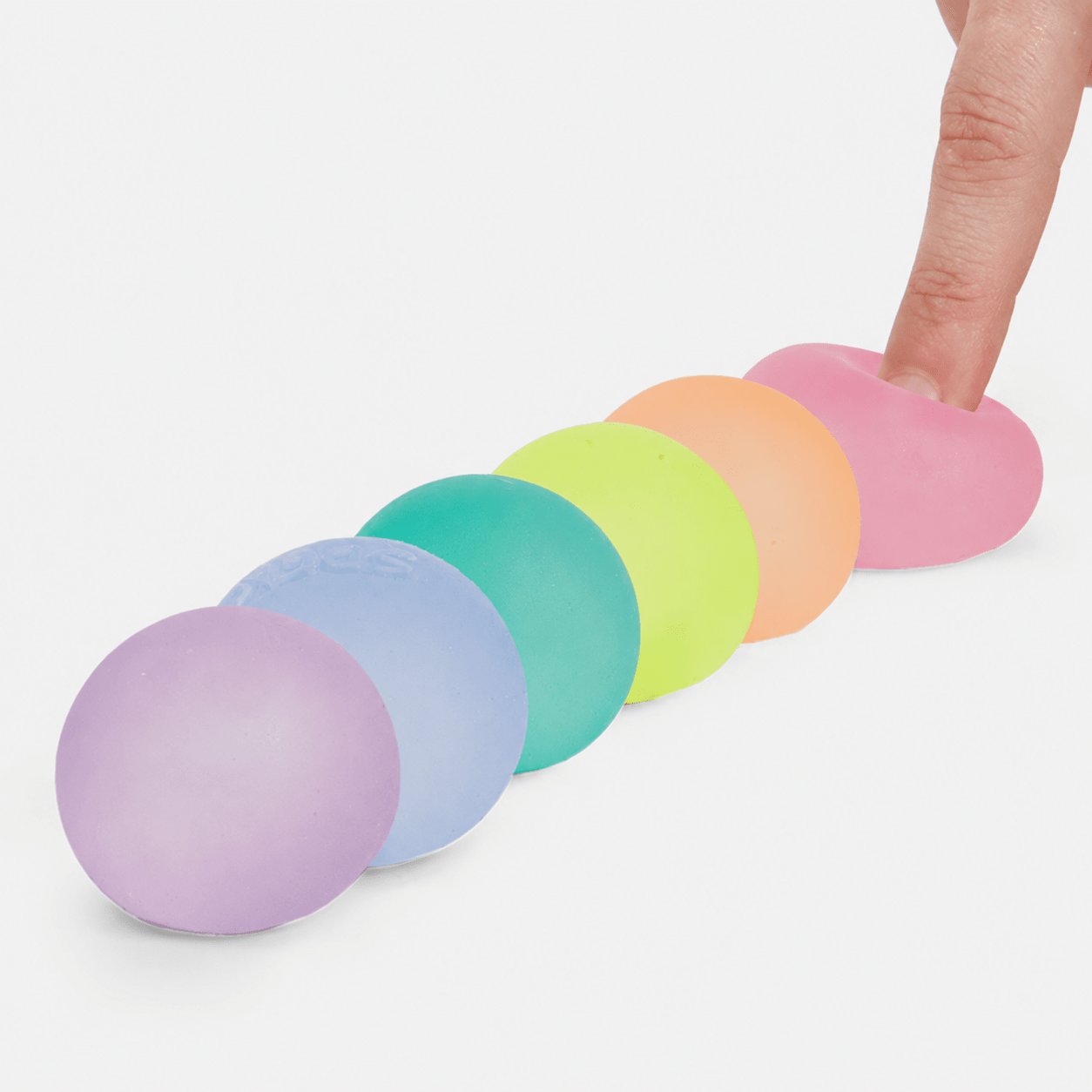
Start with firmness and rebound
Firmness is the first filter. A soft, low-resistance ball suits people who want a calm, cushioned squeeze and who tend to clench hard when stressed. A firmer ball suits people who want feedback and resistance, and who find soft squeezes unsatisfying. Rebound speed is the second filter: slow-recovery memory gel rewards a deliberate rhythm, while fast-rebound foam or elastomer rewards quick repetitive pressing.
Match the texture to your sensory profile
- Smooth and matte. The least distracting option, and a good default for desk or meeting use.
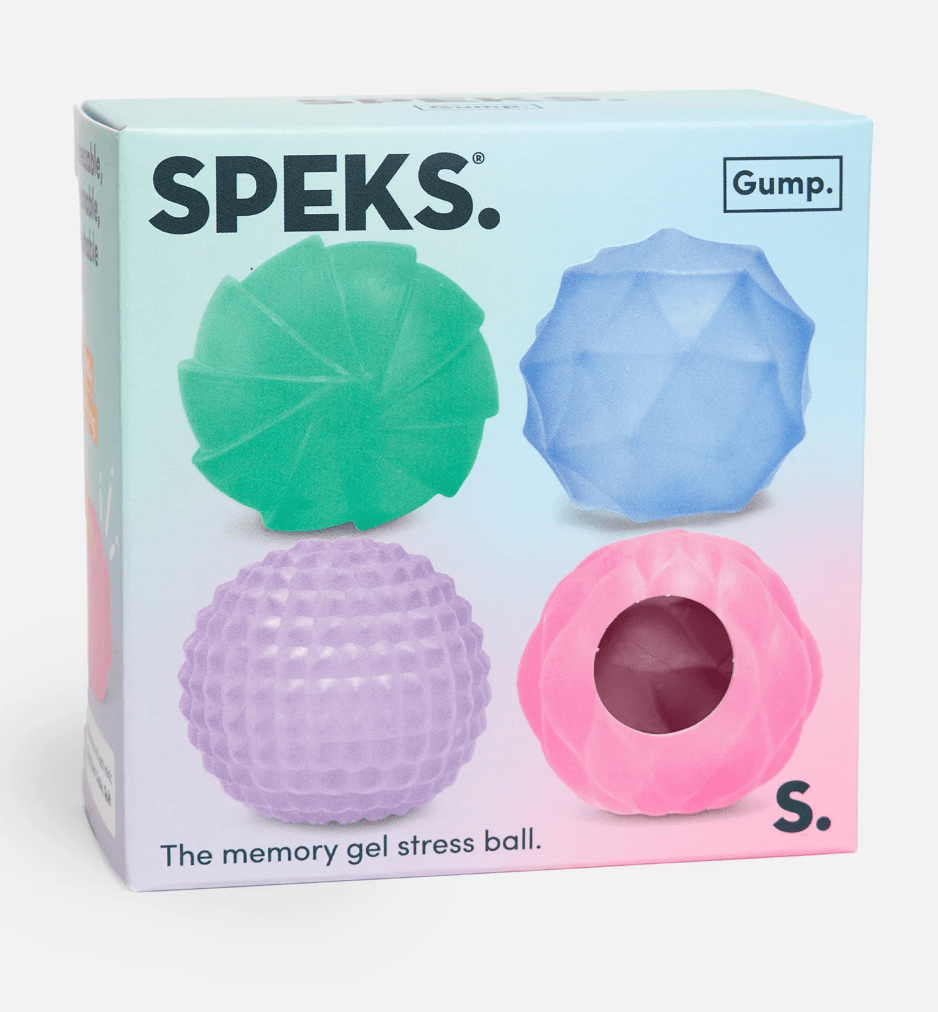
- Raised or ridged. Provides extra tactile input for people who like to run a thumb over a surface. The SPEKS Gump Textured Memory Gel Stress Ball and the SPEKS Gump Mini Surface Stress Balls 4-Pack fall here; the mini set includes four textures (teal spiral ridges, blue geometric facets, lavender grid, and pink petal-inspired grooves) so you can test which one you prefer. You can compare the textured memory gel mini set before choosing.
- Themed or shaped. The SPEKS Gump Ghost Squishy is a desk-companion option rather than a sensory-first pick, so choose it for the shape and color rather than the squeeze.
A texture that feels satisfying to one person can feel distracting or even irritating to another, so treat texture as personal rather than universal.
Size, weight, and hand fit
A ball should sit comfortably in your palm without forcing your fingers into an awkward grip. Smaller balls suit pocket carry and discreet use; larger balls suit two-handed squeezes and desk use. Weight matters too: gel-filled balls are often heavier than foam, which some users find grounding and others find tiring. If you have limited grip strength or hand pain, choose a softer, lighter ball and keep sessions short.
Noise and scent
Noise is an underrated factor. Foam and rubber balls are usually quiet, but some gel or bead fills can squeak or crinkle. Scent matters as well: new rubber and some gels have a noticeable odor that fades over time but can bother sensitive users. If you plan to use the ball in a shared office or classroom, test the sound and smell before relying on it.
Safety and material sensitivities
Check the material before buying if you have a latex allergy, since many rubber balls contain natural latex. Gel and bead fills can leak if the seam or shell fails, so inspect new balls for weak seams. Keep small balls and any ball with a loose fill away from young children and pets, because small parts and gel beads pose a choking risk.
Hygiene and replacement
Stress balls pick up hand oils, lotion, and dust. Wipe smooth surfaces with a damp cloth and mild soap, and avoid soaking gel or bead-filled balls, since water can weaken seams. Fabric-covered balls are the hardest to clean and are best kept for home use. Replace a ball when it stops returning to shape, develops a sticky or tacky surface, or shows a seam separation.
A quick checklist before you buy
- Squeeze it for a full minute and note rebound speed and hand fatigue.
- Confirm the material if you have a latex or gel sensitivity.
- Check the seam and fill for weak points.
If you are unsure, start with one ball and test it for a week before buying a set. Sensory preferences vary, and a texture that feels satisfying to one person can feel distracting to another.
Disadvantages of Stress Balls and When They Are Not Enough
Stress balls have real limits. A squeeze can ease restlessness, but it does not address the causes of persistent anxiety. Some people find that a ball becomes a distraction, and others may outgrow the sensation quickly.
A stress ball is not enough when anxiety interferes with sleep, work, school or relationships, or when it comes with panic attacks, persistent low mood or thoughts of self-harm.
Pick Your First Memory Gel Ball and Try It on a Hard Day
If you are ready to try memory gel, start with a single ball so you can judge the feel without committing to a set. The SPEKS Gump Textured Memory Gel Stress Ball is priced at $25.00 and is suited to desk breaks and everyday fidgeting.
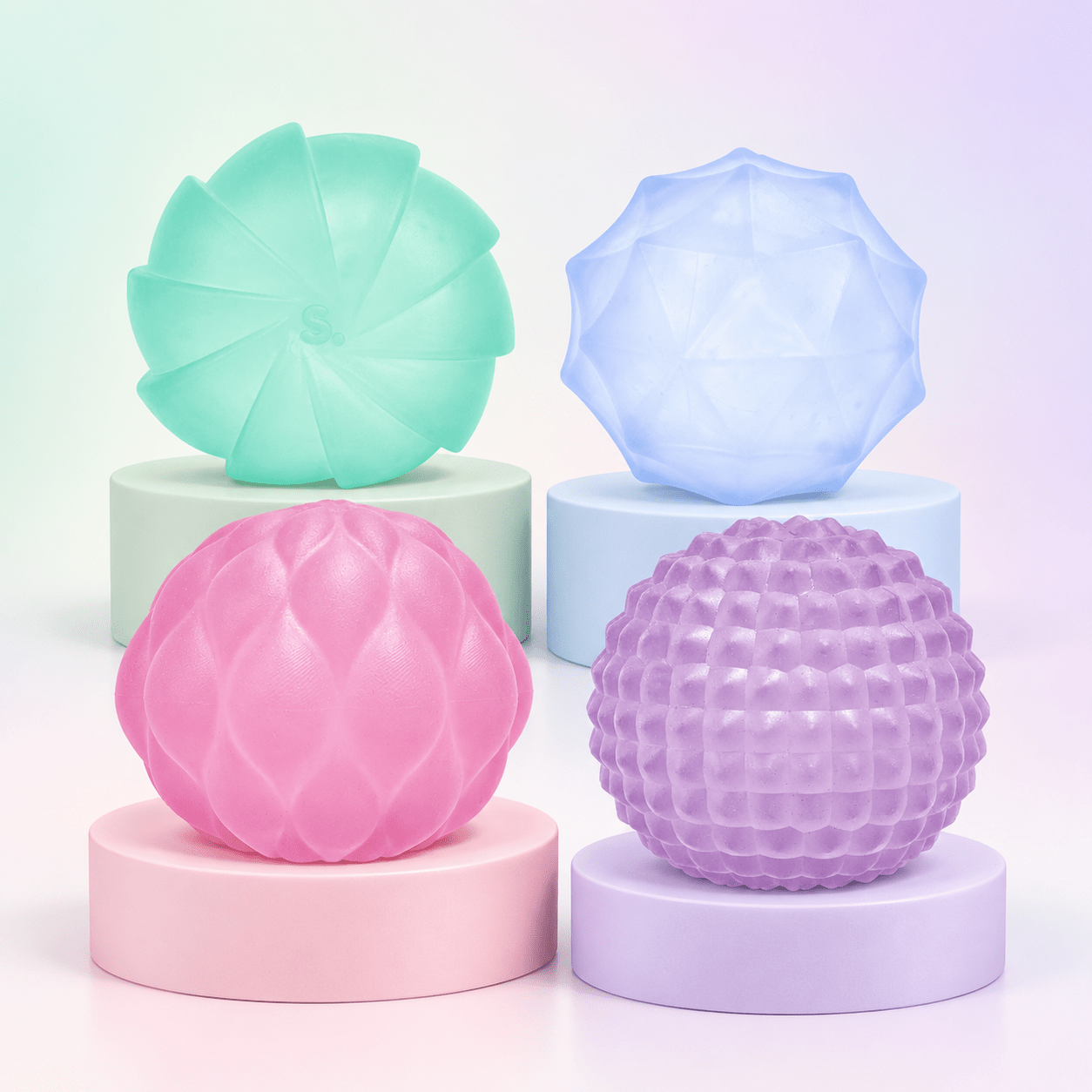
Once you know what you like, a larger set gives you options for different spaces. Browse the full collection at Hiitzchrissy and choose the texture and color that suit your routine.
Frequently Asked Questions
Do stress balls actually help anxiety?
Stress balls can give restless hands something to do and may help some people feel calmer in the moment, but the research on them specifically is limited. Most studies look at general squeezing or hand exercise rather than stress balls alone. Treat a stress ball as a small coping aid alongside other strategies, not a replacement for treatment. If anxiety is persistent or interferes with daily life, talk with a licensed mental health professional.
Are memory gel stress balls better than foam stress balls?
Memory gel balls have a slow-rising, soft squeeze that many people find more satisfying than the quick rebound of foam. Foam tends to offer more firm resistance and recovers faster, which can suit people who want a stronger grip workout. There is no published head-to-head study proving one is better for anxiety, so the right choice depends on your sensory preference. Trying a few textures is the most practical way to decide.
How long should you squeeze a stress ball?
There is no standard duration. Many people squeeze in short sets of several seconds, release, and repeat for a minute or two during an anxious moment. Pay attention to how your hand and body feel. If you notice fatigue, soreness or increased tension, stop and rest. Using the ball as a brief break rather than a long session usually works best.
Can stress balls help with focus?
Some people use a stress ball as a quiet fidget that keeps their hands busy during reading, studying or long calls. This repetitive, low-effort movement can help reduce restlessness for certain people, though the effect varies. Choose a mini or palm-sized ball that is easy to squeeze without drawing attention, and keep it nearby rather than making it the main activity.
